
Client Alert: OSHA’s Regional Office Realignment — A New Era in Federal Safety Enforcement
Written by Bart Turner and Andrew Haygood
In a regulatory shakeup as significant for employers as the college football conference re-alignment was for football fans, the Occupational Safety and Health Administration (OSHA) is undertaking its first regional office realignment since the agency’s 1970 creation under the Occupational Safety and Health Act. Changes to college football conferences have shaken up rivalries, recruiting footprints, and long-standing identities as the conferences adjust to shifting competitive dynamics, markets, and demographics. Similarly, OSHA’s regional office alignment is intended to reflect evolving workforce trends, bring OSHA offices closer to communities in need of services, strengthen agency presence in the southeastern United States, and modernize its presence nationwide.
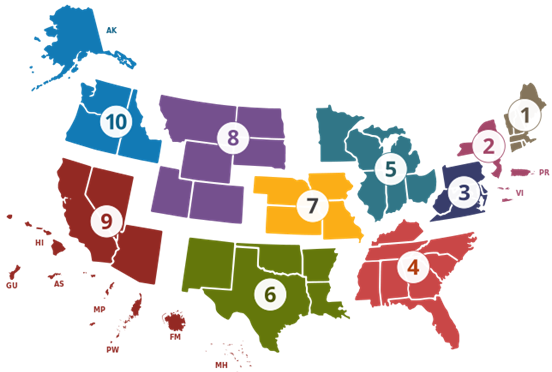
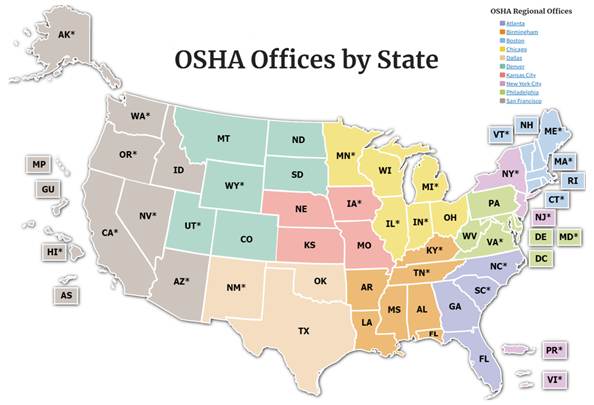
OSHA’s regional realignment—completed as of October 1, 2024 and recently beginning to impact employers and OSHA stakeholders—renames and reshapes OSHA’s regional architecture. OSHA has moved from numeric to geographic identifiers, established a new Birmingham region, and combined two west coast regions into one San Francisco region. These changes and their practical implications for employers are explained below, followed by maps reflecting the changes to regional structure.
Summary of Changes
The most significant change is OSHA’s creation of a new Birmingham Region, headquartered in Birmingham, Alabama, which serves Alabama, Arkansas, Kentucky, Louisiana, Mississippi, Tennessee, and the Florida Panhandle. This new region expands OSHA’s operational footprint in the Southeast. To support that expanded Southeastern footprint, OSHA has merged two former west coast regions, 9 and 10, into a single San Francisco Region.
The most noticeable change involves OSHA moving away from its historic numeric region labels (e.g., Region 1) to geographic designations tied to major metropolitan areas in each region, shown in the table below. This labeling change is intended to reduce confusion over geographical locations of each region and streamline outreach to the appropriate OSHA region.
| Current regional assignment | New regional designation |
| Region 1 | Boston Region |
| Region 2 | New York City Region |
| Region 3 | Philadelphia Region |
| Region 4 | Atlanta Region |
| Region 5 | Chicago Region |
| Region 6 | Dallas Region |
| Region 7 | Kansas City Region |
| Region 8 | Denver Region |
| Regions 9 and 10 | San Francisco Region |
| Birmingham Region |
Rationale and Strategic Intent
In announcing the changes, OSHA emphasized several broad goals:
- Improved Operational Efficiency
Shifting operational resources to improve agency efficiency. States now served by the Birmingham Region include large manufacturing, construction, and processing sectors that pose varied safety and health challenges. Bringing a regional office closer to these workers and employers is intended to improve outreach and regulatory engagement. Merging the two regions in the West Coast which largely consisted of states with state-run OSHA programs allows OSHA to efficiently direct resources where they are most needed.
- Enhanced Responsiveness
Faster response times to complaints, fatalities, imminent danger, and other significant workplace events.
- Equitable Service Delivery
Enhancing equitable service across regions, particularly in historically underserved communities. By situating a new regional hub in the Southeast, the agency underscores its commitment to expanding access to federal safety resources.
Practical Implications for Employers
For employers and occupational safety professionals, OSHA’s regional realignment carries immediate practical considerations:
- Regional Contacts and Jurisdiction: Employers should review updated OSHA regional boundaries and contacts to ensure that compliance communications and enforcement issues are directed appropriately. Existing area offices will still serve stakeholders, but regional oversight may shift to new regional administrators.
- Inspection and Enforcement Protocols: While federal safety standards remain unchanged, OSHA’s enforcement priorities and inspection patterns may evolve as regional offices settle into their new jurisdictions. Continued engagement with regional leadership can yield insights into localized enforcement trends.
- Outreach and Training Collaboration: The designation of geographic regions may offer new opportunities for collaboration on training and safety outreach tailored to regional industries and workforce compositions.
With offices in Atlanta and Birmingham—headquarters cities for two of OSHA’s new regions—KMCL is particularly well-positioned to assist employers with their compliance efforts in response to any enforcement trends that may result from this re-alignment.
Map of Old OSHA Regions
Map of New OSHA Regions
Contact Us
If you would like to learn more about KMCL’s top-tier environmental and energy law solutions, please reach out to us today.